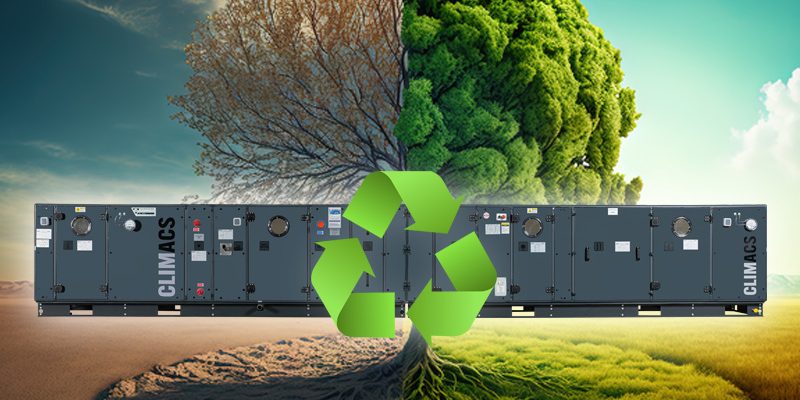
In today’s world, sustainability has become a key focus across various industries, including HVAC. Air Handling Units (AHUs), critical components of HVAC systems, play a significant role in energy efficiency and indoor air quality. As the demand for environmentally responsible solutions grows, the use of recyclable and eco-friendly materials in AHU construction has emerged as a vital trend. This blog explores how these materials are transforming AHU design and contributing to a greener future.
The Environmental Impact of Traditional AHU Materials
Traditional AHU construction often relies on materials like steel, plastics, and insulation products that, while effective, can have significant environmental impacts. These materials typically have a large carbon footprint, and their production and disposal contribute to resource depletion and pollution. The shift towards more sustainable options is not just an industry trend but a necessary evolution to reduce the environmental impact of HVAC systems.
Recyclable Materials in AHU Construction
Recyclable materials, such as aluminum and steel, are increasingly being used in the construction of AHUs. Aluminum, for instance, is not only lightweight and durable but also highly recyclable. When AHUs are built with these materials, the units can be recycled at the end of their lifecycle, reducing waste and conserving natural resources. The use of recyclable metals also enhances the structural integrity of AHUs, providing long-term benefits without compromising performance.
Eco-Friendly Materials in AHU Construction
Eco-friendly materials go beyond recyclability; they are designed to minimize environmental impact throughout their lifecycle. In AHU construction, this includes using sustainable insulation materials, non-toxic coatings, and low-emission components. For example, insulation made from natural fibers or recycled content helps reduce energy consumption by improving thermal efficiency, while non-toxic coatings protect components without releasing harmful chemicals. These materials not only support sustainability but also enhance indoor air quality by reducing the presence of volatile organic compounds (VOCs).
Advantages of Using Recyclable and Eco-Friendly Materials
The integration of recyclable and eco-friendly materials in AHUs offers numerous advantages. Economically, these materials often result in long-term cost savings due to their durability and lower maintenance requirements. Environmentally, they contribute to resource conservation, reduced emissions, and less waste, aligning with global sustainability goals. Additionally, AHUs constructed with these materials can help buildings achieve green certifications like LEED or BREEAM, enhancing the environmental credentials of the properties they serve.
Challenges and Considerations
While the benefits of recyclable and eco-friendly materials are clear, there are challenges to consider. Sourcing high-quality materials that meet both sustainability and performance standards can be complex and sometimes costly. Additionally, there is a need to balance the durability and functionality of these materials with their environmental impact. However, as technology advances and demand grows, these challenges are increasingly being addressed, making sustainable AHU construction more accessible and practical.
Future Trends and Innovations
Looking ahead, the use of recyclable and eco-friendly materials in AHU construction is expected to expand. Innovations in material science, such as biodegradable components and advanced recycling techniques, will likely play a significant role in the future of HVAC. As the industry continues to evolve, the emphasis on sustainability will drive further advancements, making eco-friendly AHUs the standard rather than the exception.
Conclusion
The shift towards recyclable and eco-friendly materials in AHU construction reflects the HVAC industry’s commitment to sustainability. By prioritizing these materials, manufacturers can reduce the environmental impact of their products while delivering high-performance solutions. As awareness of the environmental challenges we face grows, the adoption of sustainable practices in AHU construction will only become more critical, contributing to a healthier planet for future generations.
If you liked this article, you can also take a look at our articles on UV-C Light Integration in Air Handling Units and IoT in HVAC.