

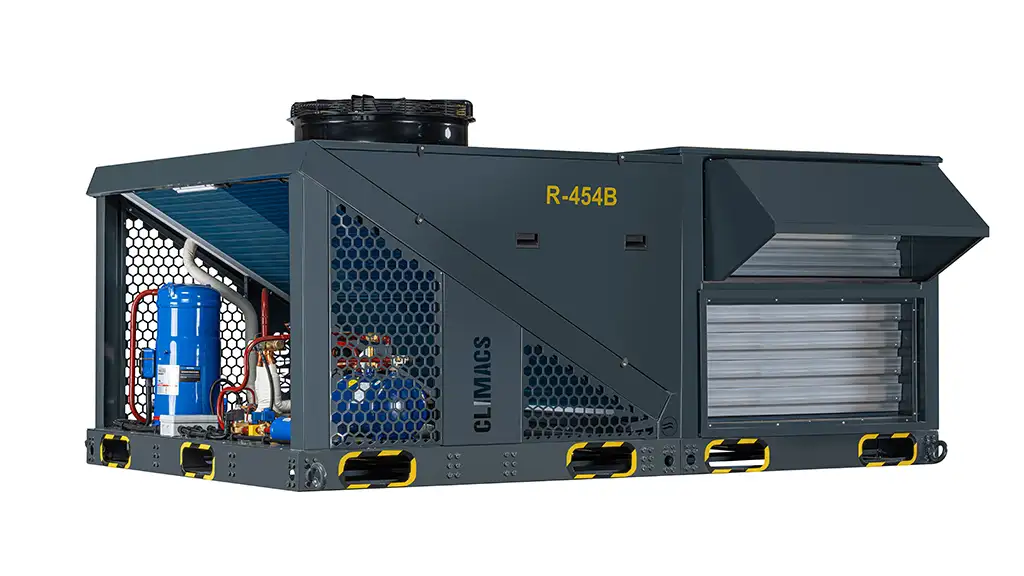
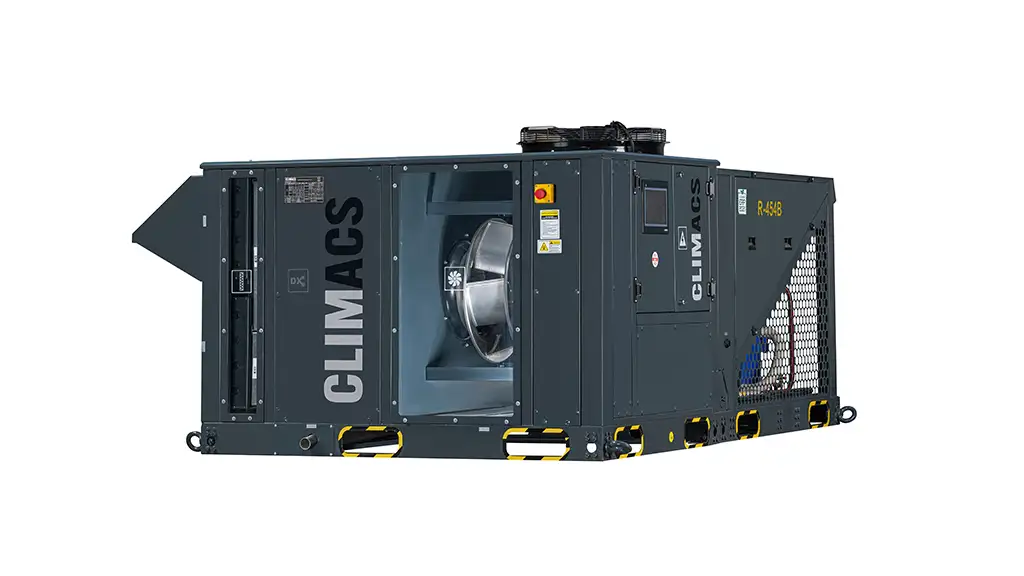
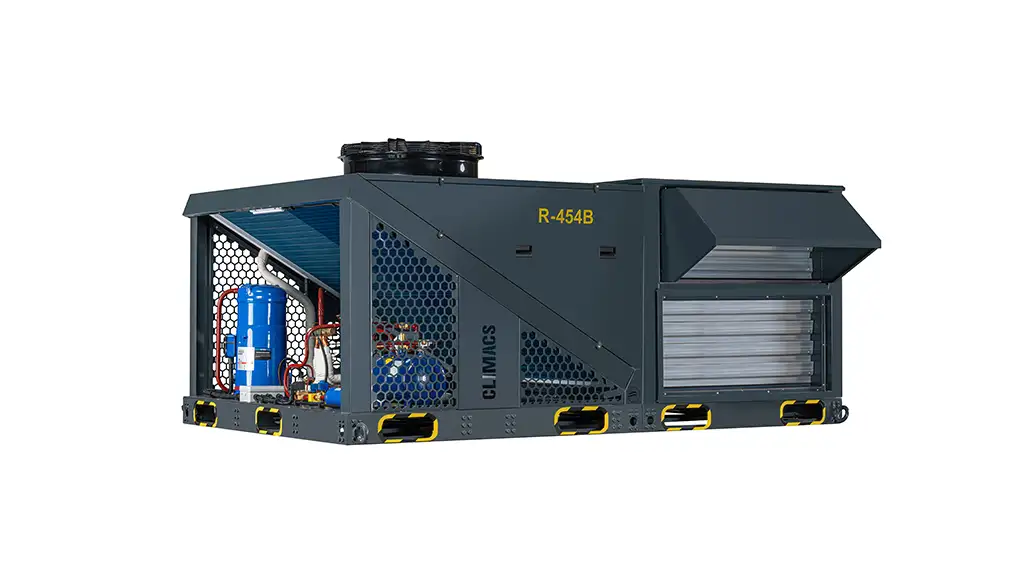
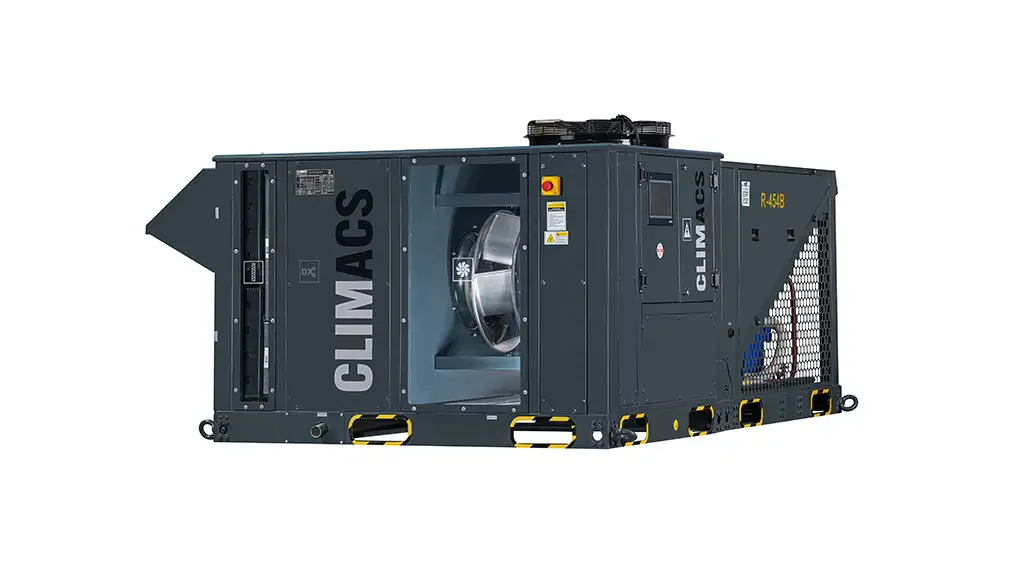
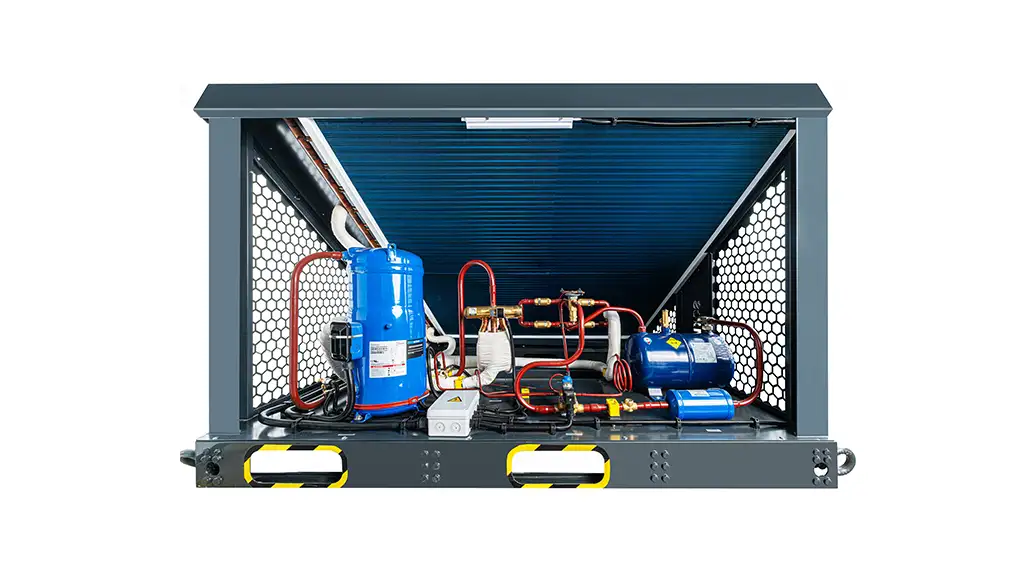
Technical Details
- Available 15 models
- Packaged type, self contained design
- Capacity: 8 kW to 500 kW
- Designed to operate in a wide range 5 °C - 56 °C
- 50 mm panel thickness with rockwool insulation (Optional PU)
- Custom made manufacturing possibility
- High-efficiency scroll compressors
- Independent (single) refrigeration circuits
- R-410A, R-407C refrigerant
- Easy installation
- Low cost
- Flexible application
Request Form
What is a Packaged Rooftop Unit (RTU)?
A Packaged Rooftop Unit (RTU) is a self-contained HVAC system that is typically installed on the roof of commercial or industrial buildings. These units combine heating, cooling, ventilation, and sometimes humidification or dehumidification into a single, compact unit. RTUs are designed to provide efficient climate control for large spaces, offering ease of installation, maintenance, and operation. Here’s an overview of the components, functions, applications, and benefits of Packaged Rooftop Units.
Components of a Packaged Rooftop Unit
A typical RTU comprises several key components:
- Compressor: Cycles refrigerant through the system for cooling or heating.
- Evaporator Coil: Absorbs heat from indoor air during cooling mode or releases heat during heating mode.
- Condenser Coil: Releases heat to the outdoor air during cooling mode or absorbs heat from outdoor air during heating mode.
- Fans: Circulate air through the unit and distribute conditioned air throughout the building.
- Air Filters: Remove dust, pollen, and other particulates from the air.
- Humidification/Dehumidification Components: Optional components to adjust humidity levels as needed.
- Control Panel: Allows users to set and monitor temperature, airflow, and other parameters.
- Dampers and Vents: Regulate airflow and ventilation.
Functions of a Packaged Rooftop Unit
RTUs perform the following primary functions:
- Heating: Uses a heat exchanger and/or electric heating elements to warm incoming air.
- Cooling: Uses refrigerant and a compressor to cool and dehumidify incoming air.
- Ventilation: Provides fresh outdoor air and exhausts stale indoor air, maintaining indoor air quality.
- Air Filtration: Removes airborne particles to improve indoor air quality.
- Humidity Control: Some RTUs can include humidification or dehumidification components to adjust indoor humidity levels.
Applications of Packaged Rooftop Units
Packaged Rooftop Units are commonly used in various commercial and industrial applications, including:
- Retail Stores: Providing climate control for retail spaces and shopping malls.
- Office Buildings: Maintaining comfortable working conditions for employees.
- Schools and Universities: Ensuring a conducive learning environment.
- Manufacturing Facilities: Controlling temperature and humidity for production processes.
- Hospitals and Healthcare Facilities: Providing precise climate control for patient comfort and safety.
- Hotels and Restaurants: Ensuring guest comfort in hospitality settings.
Benefits of Packaged Rooftop Units
- Space-Saving: Installed on the roof, freeing up valuable indoor space.
- Ease of Installation: Pre-assembled and tested units simplify installation and reduce labor costs.
- Energy Efficiency: Many RTUs are designed with energy-efficient components to reduce operational costs.
- Flexibility: Available in various sizes and configurations to meet specific building requirements.
- Low Maintenance: Easy access for maintenance and repairs compared to units installed indoors.
Comparison with Split HVAC Systems
Unlike split HVAC systems, where the components (condenser, compressor, and evaporator) are split between indoor and outdoor units, RTUs are self-contained on the roof. This design simplifies installation and maintenance, especially for buildings with limited indoor space or multiple zones requiring separate units.
In summary, a Packaged Rooftop Unit (RTU) is a versatile HVAC solution for commercial and industrial buildings, offering efficient heating, cooling, ventilation, and optional humidity control from a single, roof-mounted unit. RTUs are valued for their reliability, energy efficiency, and ease of installation, making them a popular choice in diverse applications where climate control is essential.
FAQ
A Packaged Rooftop Unit (RTU) is a type of HVAC system that combines all components—such as compressors, condensers, evaporators, and fans—into a single unit. These units are typically installed on the roof of commercial buildings to save indoor space and provide easy access for maintenance.
A Packaged Rooftop Unit (RTU) works by drawing in outside air, filtering and conditioning it (either heating or cooling), and then distributing it throughout the building via a ductwork system. The RTU also expels return air from the building to maintain indoor air quality.
The advantages of using a Packaged Rooftop Unit (RTU) include:
- Space-saving design: Frees up indoor space by placing the unit on the roof.
- Ease of maintenance: Simplifies access for maintenance and repairs.
- Integrated components: Combines all HVAC components in one unit, reducing installation complexity.
- Energy efficiency: Many RTUs are designed to be energy-efficient, reducing operating costs.
When selecting a Packaged Rooftop Unit (RTU), consider the following factors:
- Capacity: Ensure the unit can handle the building’s heating and cooling loads.
- Energy efficiency: Look for high-efficiency models to reduce energy costs.
- Building size and layout: Choose a unit that fits the building’s size and ductwork configuration.
- Climate conditions: Select a unit that can handle local weather conditions.
- Maintenance requirements: Consider the ease of access and maintenance needs.
Regular maintenance is crucial for the efficient operation and longevity of a Packaged Rooftop Unit (RTU). It is recommended to have professional maintenance at least twice a year—before the heating and cooling seasons. This includes checking and replacing filters, inspecting coils and electrical connections, and ensuring all components are functioning properly.
Yes, a Packaged Rooftop Unit (RTU) can improve indoor air quality by incorporating advanced filtration systems to remove dust, allergens, and other pollutants from the air. Some units also include options for humidity control and ventilation to further enhance indoor air quality.
Packaged Rooftop Units (RTUs) are primarily designed for commercial and industrial applications due to their size and capacity. However, they can be used in large residential buildings or homes with complex HVAC needs, although smaller, more compact systems are typically preferred for residential use.
There are several types of Packaged Rooftop Units (RTUs) available, including:
- Single-zone RTUs: Designed for small to medium-sized buildings with a single temperature zone.
- Multi-zone RTUs: Capable of serving multiple temperature zones within a building.
- Heat pump RTUs: Provide both heating and cooling by reversing the refrigeration cycle.
- Gas/electric RTUs: Use natural gas for heating and electricity for cooling.
To increase the energy efficiency of your Packaged Rooftop Unit (RTU), consider the following measures:
- Regular maintenance: Keep the unit clean and well-maintained.
- Upgrade to high-efficiency models: Choose units with higher SEER (Seasonal Energy Efficiency Ratio) ratings.
- Install programmable thermostats: Optimize temperature control to reduce energy usage.
- Ensure proper insulation: Make sure ductwork and building envelope are well-insulated.
- Utilize economizers: Allow the use of outside air for cooling when conditions are suitable.
The lifespan of a Packaged Rooftop Unit (RTU) typically ranges from 15 to 20 years, depending on factors such as the quality of the unit, frequency of maintenance, and operating conditions. Regular maintenance and timely repairs can help extend the lifespan of the unit.