Heating, Ventilation, and Air Conditioning (HVAC) systems are essential for maintaining a comfortable and healthy indoor environment. Whether in residential, commercial, or industrial settings, HVAC systems play a crucial role in regulating temperature, humidity, and air quality. In this comprehensive guide, we will explore the components, working principles, benefits, and efficiency of HVAC systems, along with their significance in green building initiatives.
What is an HVAC System?
An HVAC system stands for Heating, Ventilation, and Air Conditioning. It is a technology used to provide thermal comfort and acceptable indoor air quality. HVAC systems are integral to various applications, including homes, offices, hotels, and hospitals.
Key HVAC System Components
- AHUs are responsible for conditioning and circulating air within a building. They typically include filters, fans, and heating/cooling elements.
- RTUs are packaged units installed on rooftops. They provide heating and cooling for large commercial spaces and are known for their efficiency and ease of maintenance.
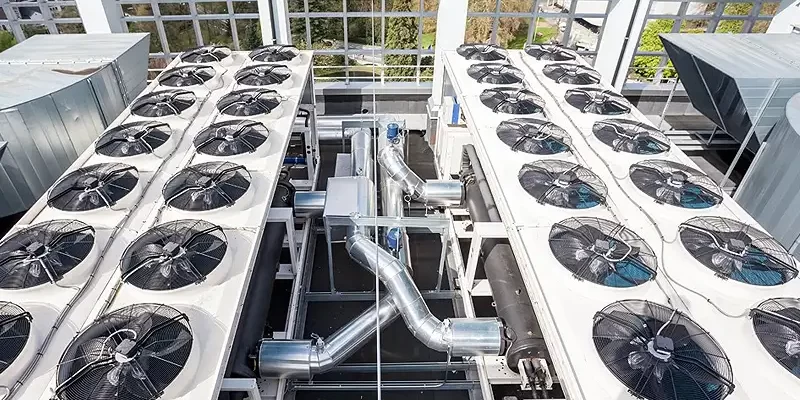
- This component expels heat absorbed from the indoor environment to the outside. It works in conjunction with the evaporator coil to complete the refrigeration cycle.
Heat Recovery Ventilation Unit (HRV)
- HRVs improve energy efficiency by recovering heat from exhaust air and transferring it to incoming fresh air, reducing heating and cooling loads.
Energy Recovery Ventilation Unit (ERV)
- Similar to HRVs, ERVs transfer both heat and moisture between the incoming and outgoing air streams, enhancing energy efficiency and indoor air quality.
- FCUs use a fan to blow air over a coil filled with hot or cold water, providing heating or cooling to a specific area.
- These units are designed to remove grease, smoke, and odors from commercial kitchens, improving air quality and safety.
- WSHPs use water instead of air to transfer heat, making them highly efficient and suitable for a variety of applications, including green buildings.
HVAC System Working Principle
HVAC systems operate on the principles of thermodynamics, fluid mechanics, and heat transfer. The basic working principle involves:
- Heating: Furnaces or boilers generate heat through combustion or electric resistance, which is then distributed via ducts or radiators.
- Ventilation: Fresh air is brought in, and stale air is expelled, ensuring proper air circulation and quality.
- Air Conditioning: Refrigerants absorb heat from indoor air and release it outside, cooling the indoor environment.
Benefits of HVAC Systems
- Comfort: HVAC systems provide consistent indoor temperatures and humidity levels, enhancing comfort for occupants.
- Health: Proper ventilation and air filtration reduce pollutants and allergens, improving indoor air quality.
- Energy Efficiency: Modern HVAC systems are designed to be energy-efficient, reducing operational costs.
- Versatility: HVAC systems can be tailored to meet the specific needs of different buildings and applications.
HVAC System Efficiency
Efficiency is a critical factor in HVAC systems. High-efficiency systems use less energy to achieve the same level of heating or cooling, reducing energy bills and environmental impact. Key factors that influence HVAC system efficiency include:
- Advanced components: High-efficiency compressors, fans, and heat exchangers.
- Proper sizing: Ensuring the system is correctly sized for the building.
- Regular maintenance: Keeping the system in optimal condition through routine inspections and servicing.
HVAC Systems in Green Buildings
Green buildings prioritize energy efficiency and sustainability, making HVAC systems a central component. Key strategies for integrating HVAC systems into green buildings include:
- Using high-efficiency equipment: Such as AHUs, HRVs, and WSHPs.
- Incorporating renewable energy sources: Like solar panels and geothermal systems.
- Implementing smart controls: To optimize system performance and reduce energy consumption.
- Ensuring proper insulation: To minimize heat loss and gain.
Conclusion
HVAC systems are vital for maintaining comfortable, healthy, and energy-efficient indoor environments. By understanding the components, working principles, and benefits of HVAC systems, as well as their role in green building, you can make informed decisions to enhance your living or working spaces. Contact us for expert advice and high-quality HVAC solutions. Our team is dedicated to helping you achieve optimal indoor climate control and energy efficiency.